Electric cooking and grid reliability: evaluating stove adoption and power quality
nLine deployed sensors with 54 households in the towns of Gilgil, Naivasha and Nakuru for a study aimed at examining the drivers of electric cookstove adoption. Researchers from the University of Pennsylvania and University of Chicago worked together with the Busara Lab to understand household decision-making around electric stove buying and usage. Data from the sensors will support the research team in understanding how grid power quality and reliability (PQR) influence cookstove adoption and usage. By measuring PQR as directly experienced by each grid-connected household, this project aims to better understand how grid quality affects the global electric cooking transition.
Motivation
Over 4 billion people worldwide lack access to modern cooking technologies, relying instead on biomass fuels such as charcoal, wood, and crop waste (World Bank, 2020). At the same time, more than 2 billion people have gained access to electricity in recent decades (World Bank, 2024). This expansion of electricity access presents a new opportunity: the large-scale adoption of electric cooking technologies.
Electric stoves could deliver meaningful benefits for low-income households. Switching from biomass fuels to electricity could reduce household energy expenditures, improve indoor air quality, and decrease exposure to harmful smoke associated with traditional cooking methods. In addition to these private benefits, electric cooking has important societal benefits. Widespread adoption could reduce carbon emissions, slow deforestation, and improve environmental outcomes in regions heavily dependent on charcoal and firewood. Previous large-scale distribution efforts for improved biomass cookstoves have already reached millions of households and generated millions of carbon credits through reduced emissions.
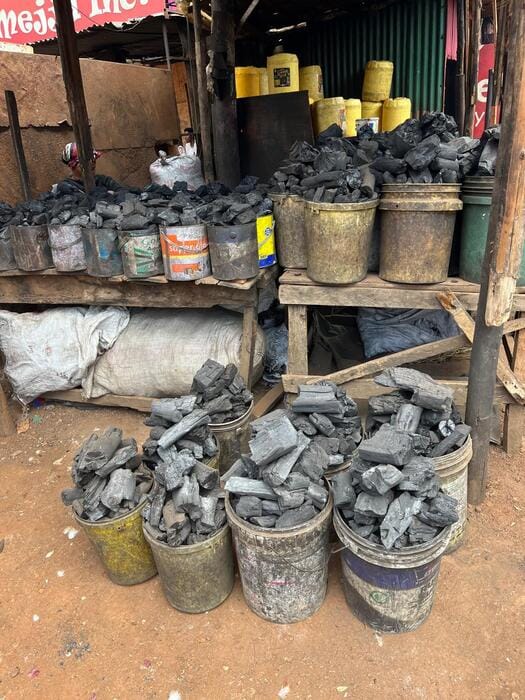
In Kenya, the national electricity distributor (Kenya Power) introduced the “Pika na Power” (”Cook with Power”) initiative, targeting electric cooking adoption among 5% of customers (about 500,000 households) in the short term and 10% in the medium term. Building on this momentum, the Government of Kenya’s 2024 National Electric Cooking Strategy Action Plan proposes several policy measures to encourage adoption, including VAT waivers on electric cooking appliances, public awareness campaigns, expanded consumer financing, investments in grid capacity and reliability, and a dedicated e-cooking electricity tariff aimed at making electric cooking more affordable relative to LPG and biomass fuels.
For electric cookstove adoption and usage to be successful, reliable electricity must be supplied to households. Investments in grid infrastructure can improve generation capacity and voltage stability, helping ensure electric stoves operate reliably. But what is the link between power quality and electric cooking?
nLine sensor data aimed to support this study in Kenya in answering the following research question: Does the quality and reliability of grid power affect individuals’ usage and adoption of electric cookstoves?
Project Description
The primary study partner, ECOA, has been developing and piloting electric stoves since its mass distribution of improved biomass stoves across sub-Saharan Africa (e.g. more than 3 million stoves have been sold to households in Kenya). For this study, the research team quasi-randomly enrolled households in the towns of Naivasha, Gilgil and Nakuru that had high potential for electric stove adoption (i.e. they have access to grid electricity and they spent at least 50% of their energy expenditures on charcoal or wood). In total, 620 households opted to purchase the electric cookstove through this study.
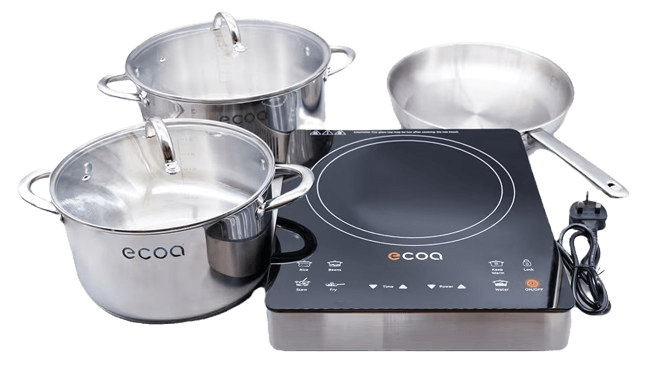
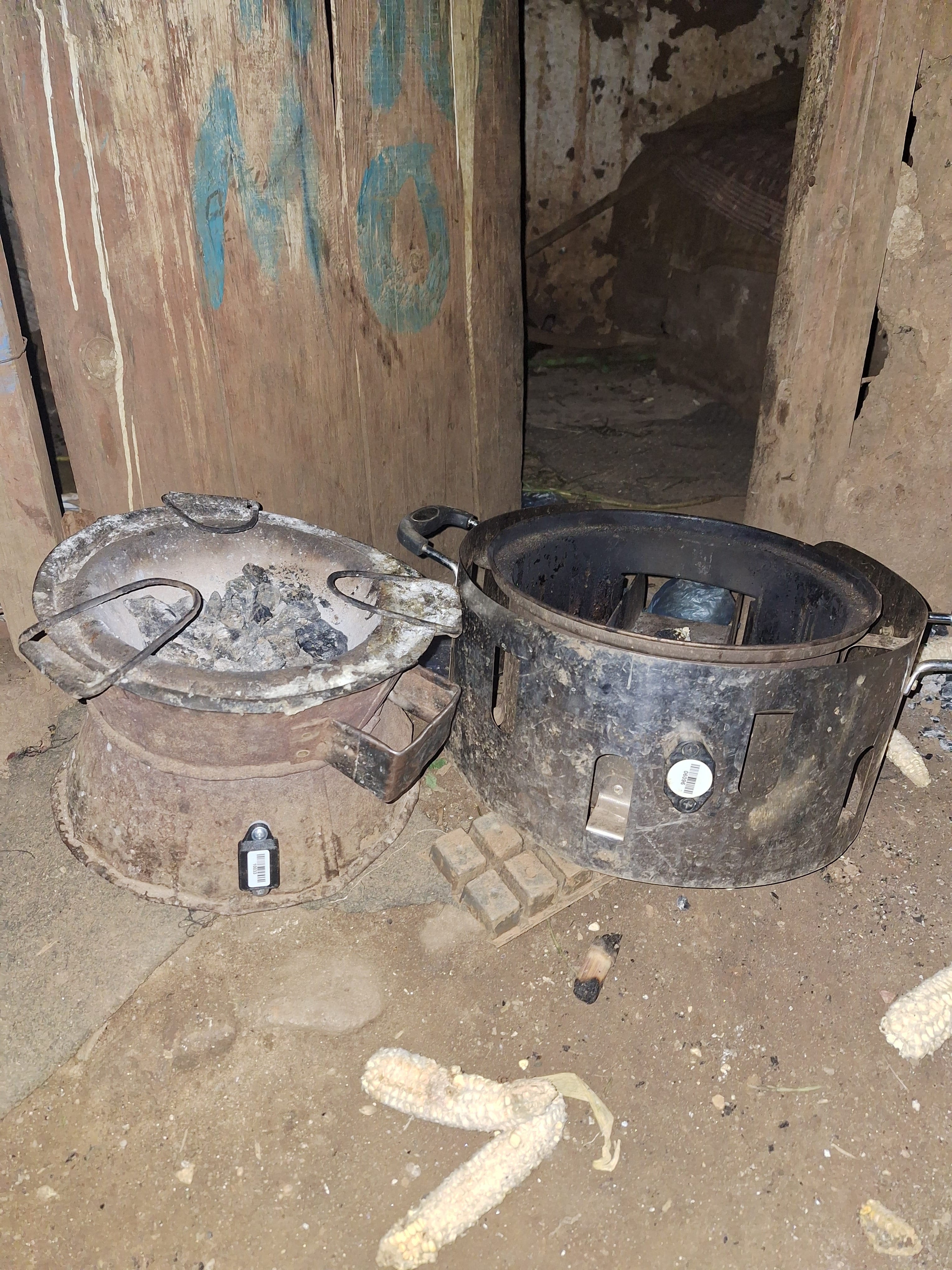
The electric cookstove available for sale to study participants. Two pots and one pan were included so households had sufficient equipment for cooking. The research team attached temperature sensors by Climate Solutions to the cookstove in order to match nLine sensor data with charcoal stove usage data to see how households respond to power quality and reliability challenges.
During the initial enrollment survey, 31 households were randomly chosen to have a nLine sensor installed at their home for approximately three months to directly measure grid power reliability and quality, of whom 6 later chose to buy the electric stove. After three months, the sensors were picked up and installed with a different set of 25 households that had been randomly selected from the set of electric cookstove buyers. nLine generated 27 weeks of minute-by-minute, household-level measurements of PQR, while also being able to generate grid-level insights on Kenya Power’s distribution grid network.
This deployment strategy allows the research team to understand for example, how power quality drives household decision-making about whether to buy an electric stove. It also allows comparisons in electricity quality patterns among those who bought the stove and those who did not. This could reveal, for example, the degree to which “stacking” (the use of multiple different stove types by a single household) is driven by power outages or voltage fluctuations that might undermine the electric stove’s functionality.
nLine sensors continuously measure outlet-level voltage magnitude, AC frequency, and power state at two-minute intervals at each household. These sensors measure the extent of PQR problems during key cooking times, and whether poor PQR is correlated with lower willingness to pay and usage. Researchers will estimate how cookstove usage changes as a result of power outages or voltage fluctuations and will shed light on whether the bulk grid would be capable of supporting mass adoption of cookstoves. Researchers will combine this sensor data with ECOA cookstove usage data to characterize the link between grid power quality and electric cookstove usage and adoption decisions.
This study has research approval in Kenya (MIRERC 069/2025 and Nakuru County Unified Trade Permit No.2025/H23H7831401) and the US (University of Pennsylvania IRB Protocol #855529). A Pre-Analysis Plan was filed with the AEA RCT Registry (ID: 16832).
Key Insights
Stay tuned for results!