Voltage stabilizer field evaluation & Open data initiative
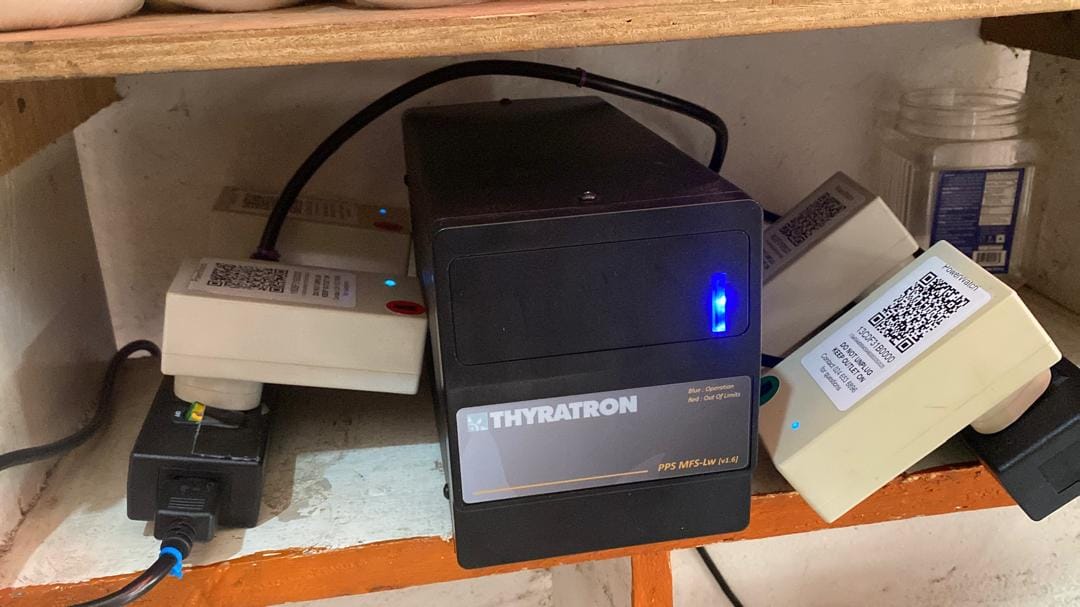
nLine, in partnership with New Horizons (a division of Global Health Labs), deployed 12 WHO-prequalified voltage stabilizers manufactured by Thyratron SA in Greater Accra, Ghana to evaluate stabilizer performance under real-world grid conditions. Over an 86-day period, nLine collected high-frequency voltage data from both upstream and downstream of the stabilizers to evaluate performance and durability, with the ultimate goal of informing the effectiveness of deploying the stabilizers at scale in medical cold chain equipment across the Global South.
In parallel, nLine processed and published the MetaFridge dataset, making longitudinal power quality data from vaccine storage refrigerators openly accessible to support research, product development, and policy in energy and healthcare systems. This dataset was originally collected and published by New Horizons from health facilities in Kenya between 2017 and 2025.
Motivation
Across sub-Saharan Africa, unreliable electricity continues to constrain the delivery of essential services. While access to electricity has improved significantly in recent years, power quality and reliability (PQR) remain persistent challenges. In Ghana, for example, national household electrification reached 87.9% in 2024, yet the grid is still characterized by frequent outages, voltage sags, and voltage spikes. These disruptions impose real economic and social costs. In healthcare settings, they can be life-threatening.
Cold-chain infrastructure is particularly vulnerable. Vaccines, insulin, blood products, and other temperature-sensitive medical supplies must be stored within strict temperature ranges, typically 2–8°C, to remain effective. When power quality deteriorates, refrigeration equipment can fail or operate inefficiently and compromise the integrity of these critical supplies. The consequences extend beyond equipment damage: spoiled vaccines can delay immunization campaigns, degraded medicines can reduce treatment efficacy, and compromised blood products can jeopardize emergency care.
Voltage stabilizers are widely deployed as a mitigation strategy to protect equipment from voltage fluctuations by regulating output within specified tolerance ranges. Many of these devices, including those prequalified under the World Health Organization’s Performance, Quality and Safety (PQS) framework, are tested under controlled lab conditions and certified against global standards. However, there is limited quantitative evidence on how these systems perform under the highly variable grid conditions typical of low- and middle-income countries.
This project was motivated by two complementary needs:
- To generate rigorous evidence on the performance of voltage stabilizers under real-world field conditions, and
- To expand access to longitudinal power quality data to support broader learning and innovation for the design and procurement of healthcare equipment in the Global South.
Project Description
nLine partnered with New Horizons (a division of Global Health Labs) to conduct a field-based evaluation in Ghana of WHO-prequalified voltage stabilizers manufactured by Thyratron SA. The project focused on understanding how these stabilizers perform under real-world grid conditions, particularly in environments characterized by voltage variability and intermittent outages. To capture a representative range of power quality conditions, stabilizers were installed across four districts near Accra: Dansoman, Mampong, Suhum, and Koforidua. These districts were selected based on historical grid performance data, which showed a range in the quality and reliability of grid power.
This project originally targeted the installation of stabilizers in healthcare facilities; however, project timelines shifted installation to 12 small and medium-sized businesses located on the same distribution transformers as nearby health facilities. This approach allowed nLine to approximate the power conditions experienced by healthcare infrastructure while enabling rapid stabilizer installation and monitoring. At each business, stabilizers were installed alongside refrigeration-equivalent electrical loads, and nLine’s sensors were configured both upstream (before the stabilizer) and downstream (after the stabilizer) to capture high-frequency grid voltage and frequency measurements every two minutes. This setup enabled a direct comparison between incoming grid power and stabilized output, providing a detailed view of stabilizer performance.
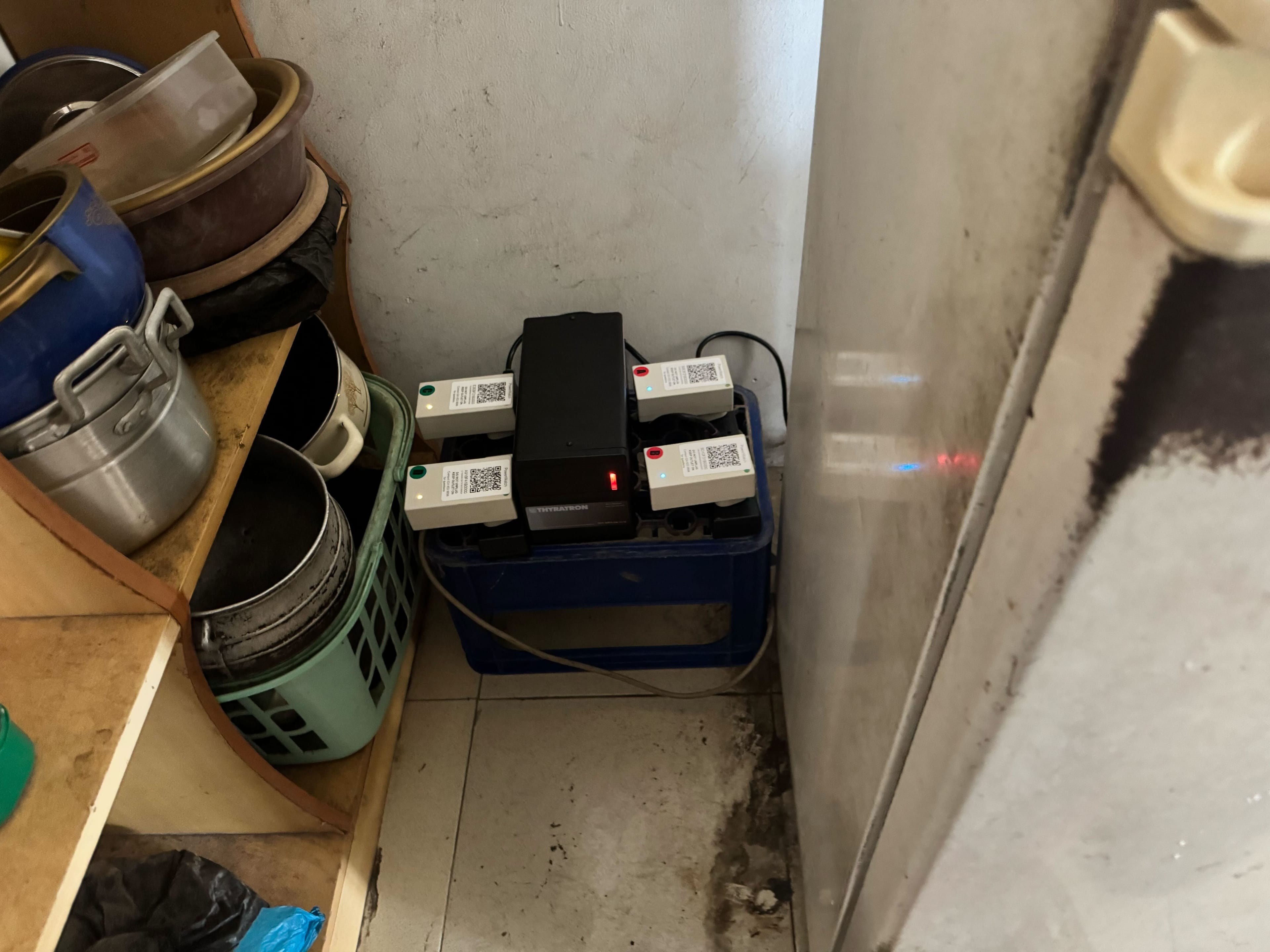
Stabilizer and sensor measurement configuration. Sensors were installed both upstream (two green stickered sensors on left) and downstream (two red stickered sensors on right) of the voltage stabilizer’s output to measure performance. Standalone stabilizers (black box) were connected to refrigerators and freezers.
Over an 86-day monitoring period from July to October 2025, nLine collected and analyzed data to evaluate stabilizer performance against defined thresholds. Output voltage conditions were categorized into “nominal” events (195.5–253 V), “warning” events (192 V to 195.5 V) , and “failure” events (below 192V and above 253V). These measurements were processed and visualized through custom dashboards, thus, allowing both nLine and project partners to track stabilizer performance and iteratively refine evaluation metrics.
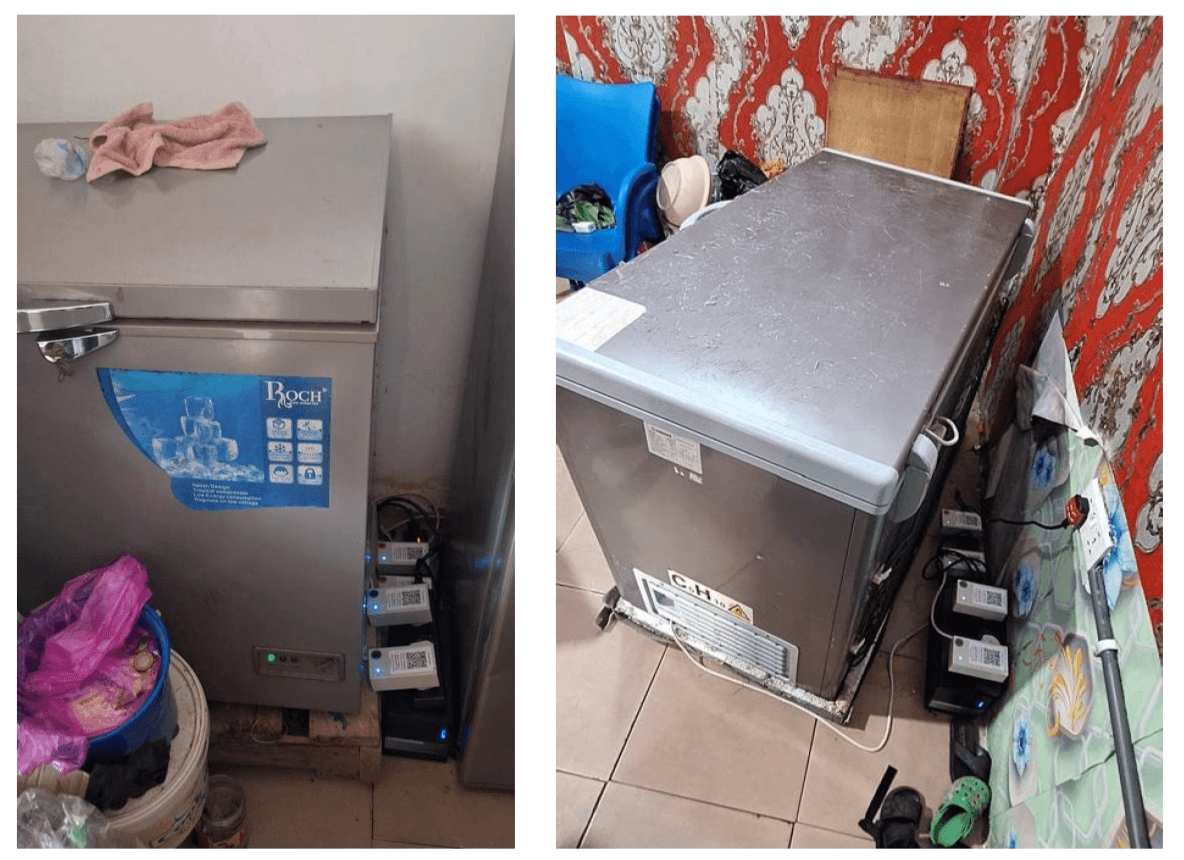
Standalone stabilizers tested in the field. Standalone voltage stabilizers (block box) were plugged into fridges and freezers in small business. nLine sensors were installed both upstream and downstream of the stabilizer’s output.
In parallel, nLine processed and published the MetaFridge dataset, originally collected by New Horizons from health facilities in Kenya between 2017 and 2025. This data publication effort involved structuring large-scale time-series data, developing a data dictionary and supporting documentation, and deploying a public-facing access portal.
Key Insights
Strong stabilizer performance under real-world conditions
The 12 voltage stabilizers maintained output voltage within expected operating ranges for the majority of the monitoring period. In 10 out of 12 sites, stabilizers operated within the prescribed tolerance range of 195.5–253 V (“good performance”) for 79% - 98% of the ~2.7 month time period, demonstrating generally reliable performance under varied and often challenging grid conditions.
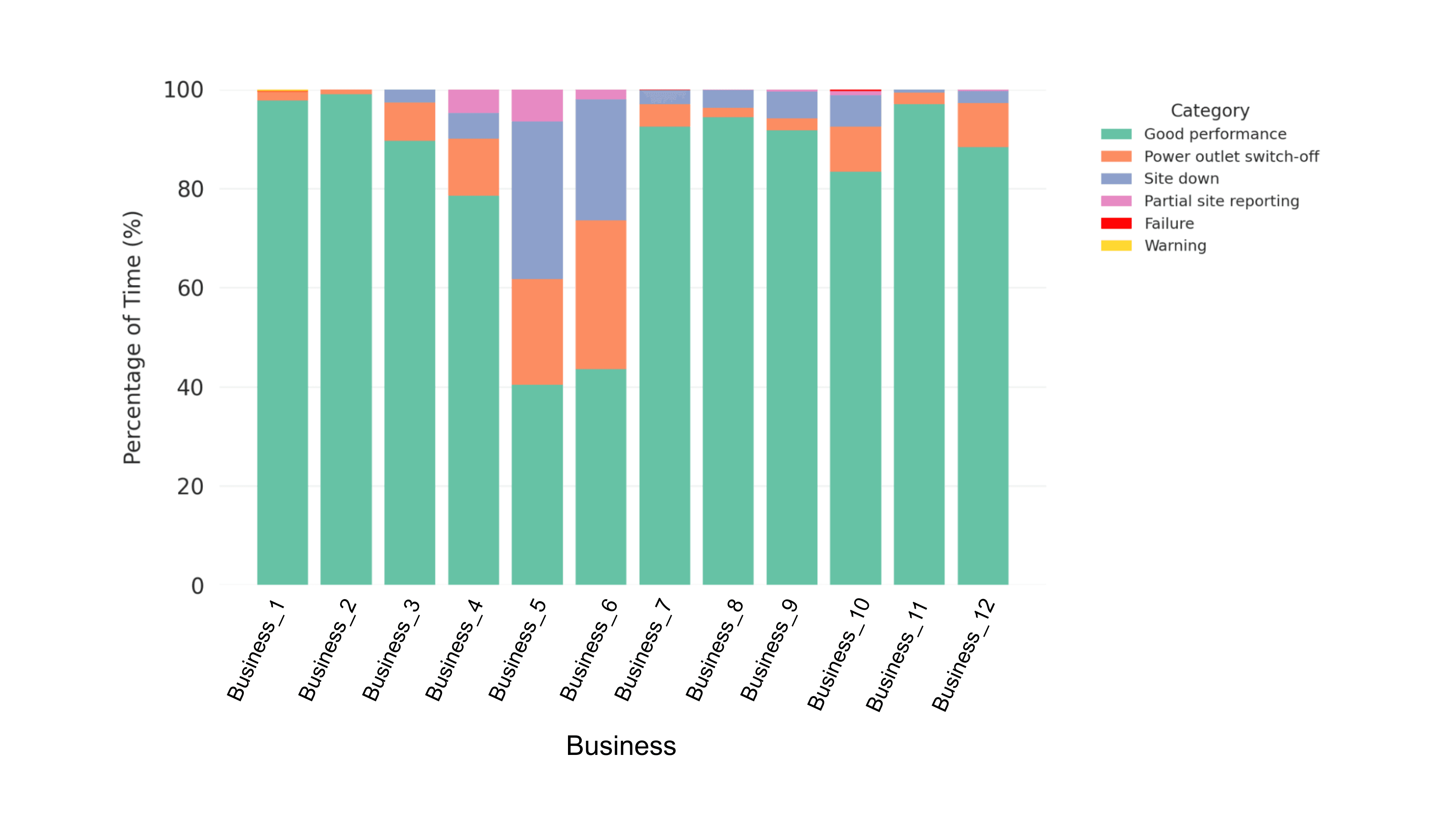
Time composition of monitored voltage states per business. Good stabilizer performance was recorded 79-98% of the time at 10 out of the 12 locations. Good performance indicates periods when the stabilizer maintained downstream voltage within the PQS tolerance band, either due to adequate grid supply or successful voltage correction; Power outlet switch-off are periods when the outlet delivering power to the connected sensors and stabilizer had no power supply. This may either be due to grid outage or other localized factors such as unpaid electricity, unplugged power strip from the mains AC outlet, or switched off mains AC outlet. Site down indicates periods when all four sensors at a site stopped reporting, typically after sustained power loss resulting in complete depletion of sensor batteries. Partial site reporting are periods with missing data from either upstream or downstream sensors. Failure indicates periods when the stabilizer failed to maintain output voltage within the PQS range (195.5–253 V), excluding warning events. Warning are periods when the stabilizer stepped down output voltage slightly below the lower PQS limit (192–195.5 V).
The importance of local grid context
Testing voltage stabilizers in controlled environments is not enough—performance must be evaluated against the actual power quality and reliability conditions on the ground. While upstream grid voltage was within nominal ranges most of the time (over 90% of observations), downstream measurements revealed longer periods of undervoltage after stabilization. This reflects how stabilizer regulation strategies, particularly step-based voltage adjustments, interact with local grid conditions. These findings highlight the importance of evaluating equipment performance not only against global standards, but also within the context of national grid codes and real operating environments.
Equipment performance is shaped by operational realities on the ground
Equipment performance is not determined by engineering alone. User behavior, installation practices, and on-the-ground conditions, such as unplugging equipment or inconsistent power access, directly affect outcomes. For example, at some businesses, routine manual switching off of power outlets or unplugging refrigerators (e.g. on weekends or when customer traffic is low) led to extended periods without data or power supply to nLine’s sensors and the stabilizer. These findings reinforce the importance of testing technologies in real-world environments, where human and operational factors influence how equipment will actually be used and maintained in practice.
Field testing enables continuous improvement
This project highlighted the value of field-based evaluation as a feedback mechanism, opportunity for identifying edge cases, and support in ongoing product refinement. Further, using high-frequency equipment monitoring, can capture patterns of sustained voltage behavior that would not be visible through spot checks. This continuous dataset enabled identification of repeated warning conditions, intermittent outages, and stabilizer response patterns, demonstrating the value of longitudinal monitoring to understand true equipment performance over time.